
Announcements
Medical Cannabis Rescheduling Sparks Swift Industry Reaction
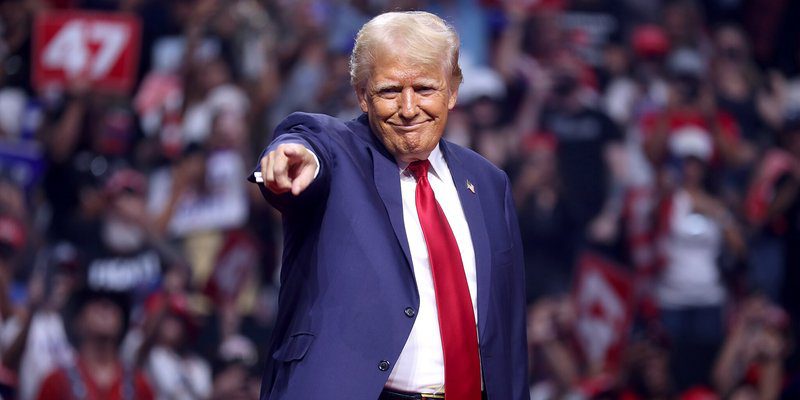
The Trump administration on Thursday carried out the president’s directive to fast‑track a long‑anticipated review of federal cannabis policy by issuing an order to reclassify state‑legal medical marijuana to Schedule III. Acting Attorney General Todd Blanche signed the action early Thursday, a move that acknowledges accepted medical use and opens a pathway for DEA registration of state‑licensed operators. Cannabis outside regulated medical programs remains a Schedule I substance.
The decision does not legalize medical marijuana nationwide, but it represents the most significant federal shift on cannabis in decades and immediately reshapes the regulatory landscape for research, prescribing, and compliance.
Licensed operators and ancillary businesses were quick to comment on the significance and historic nature of the move. Ryan Hunter, chief revenue officer at vape manufacturer Spherex, summed up the new changes in a statement emailed to IgniteIt.
“This morning, the US Department of Justice made a very silly announcement,” he wrote. “As of today, our government now has three different categories for the plant known as cannabis sativa: 1) Hemp 2) Medical Marijuana 3) Other. Though this is all the same plant, categories 1 and 2 are now considered Schedule III substances under the Controlled Substances Act (similar to Tylenol + Codeine), but category 3 is still considered Schedule 1 (along with heroin). My mind boggles at these arbitrary and artificial distinctions, but here we are.”
Industry Calls the Move Historic
Trulieve founder and CEO Kim Rivers said the company “applauds the Trump Administration for following through on the decision to reclassify medical marijuana as a Schedule III substance.”
“The final order creates an expedited process for state-licensed operators to obtain DEA registration to manufacture, distribute, and/or dispense medical marijuana,” Rivers wrote in a statement to IgniteIt. “This decisive action affirms the value of medical marijuana while creating a lane for a responsible, regulated industry to serve patients and physicians. The dual approach of utilizing the treaty pathway and the rulemaking process ensures rescheduling medical marijuana happens quickly and completely, and is an unequivocal statement of the President’s commitment to make good on his campaign promise.”
Others emphasized the broader meaning of the shift. Socrates Rosenfeld, CEO and co-founder of Jane Technologies, said that the “news is a long time coming, and it matters.”
“Federal rescheduling is a signal that Washington is finally catching up to what people have known for years – cannabis belongs in a different category entirely,” Rosenfeld said in a statement. “For veterans especially, this is personal. So many have turned to the plant to manage what they carried home from service, often at real legal and social risk. This acknowledgment that cannabis has accepted medical use is overdue, and it carries real weight for the people who need it most.”
Rusty Wilenkin, CEO of cannabis brand Old Pal, told IgniteIt that “Rescheduling is a big deal. For us, it signals real progress in the broader acceptance of cannabis at the highest levels, and that’s something I welcome.”
“But it also raises some important questions. The biggest one, for me, is whether the government is going to take meaningful steps to right the wrongs of the war on drugs, starting with releasing non-violent cannabis offenders who are still incarcerated,” Wilenkin added. “Beyond that, I’m hopeful this creates a path toward a stronger, better-capitalized industry, one that isn’t held back by 280E or limited access to banking. As a brand, we’re ready for the changes that will come with rescheduling. That said, what it actually looks like in practice, and how it impacts us, remains to be seen.”
Medical Markets See Immediate Impact
Some executives noted that the order’s most direct effects will be felt in medical markets, where research and compliance barriers have long slowed progress. Nicolas Guarino, co-founder and CEO of vape manufacturer Jaunty, said the “most immediate impact would be felt in research in medical markets.”
“Adult-use markets in 24 states and D.C. would still face significant federal limitations that hinder the industry from reaching its full potential,” Guarino said in a statement. “We’re hopeful that this decision marks a progressive and landmark decision – one that sets a clear precedent and helps advance improved measures like SAFE Banking, increased access to logistic providers and to capital, and ultimately, federal legalization.”
Operators See a Turning Point
Others framed the announcement as the most consequential federal cannabis action to date.
“We view the advancement of cannabis rescheduling as the single most significant reform in U.S. cannabis policy to date, with far-reaching implications,” Marimed chief communications officer Howard Schacter wrote in a statement. “For MariMed, it creates a more sustainable path to reinvest and grow, while driving legitimacy and research across the industry and reflecting long-overdue recognition of cannabis’s medical value and a more rational approach to public health for the nation.”
Bryan Gerber, CEO and co-founder of pre-roll supplies and packaging vendor HARA Supply, called the decision “a historic milestone and a breakthrough our industry has pursued for more than a decade.”
“While it falls short of full legalization, it meaningfully expands opportunities for medical and scientific research, lowers barriers to institutional investment, and gives financial institutions the confidence to engage with legitimate operators,” Gerber wrote. “This decision lays an important foundation for a more legitimate, equitable, and sustainable cannabis marketplace, while underscoring that significant work still remains to achieve the broader reforms this industry needs.”
Josh Kesselman, publisher of High Times Magazine and founder of RAW rolling papers, noted the limited nature of the reform, warning that its significance and scope remain to be seen.
“Rescheduling cannabis would be a meaningful acknowledgment that this plant has real medical value, but let’s not pretend it is the finish line. It is not legalization, it is not descheduling, and it does not automatically fix the deeper problems in federal cannabis policy,” Kesselman wrote in a statement about the rescheduling announcement.
“My concern is simple: if Washington gets this wrong, reform could end up favoring the biggest, best-connected players while leaving small farmers, independent operators and the people who built this movement behind,” he added. “We are already seeing early signs of how federal healthcare and institutional channels may concentrate opportunity in a very narrow lane. That should raise hard questions for everyone paying attention.”
Adult-Use Operators Still Face 280E
Despite the sweeping nature of the announcement, several sources pointed out that Blanche’s order does not extend to adult‑use businesses. Those companies remain subject to Section 280E of the federal tax code, which denies standard deductions to operators handling Schedule I substances. That gap, they said, ensures that the policy debate is far from resolved.
“And as much as this moment matters, Schedule III is a step, not a finish line. The mission continues – full legalization, 280E relief, and criminal justice reform for the people still serving time for what’s now accepted as medicine are all still the work in front of us. The momentum is real, and we have a rare chance to carry this forward for the Americans this industry serves and the generations still to come.”
Adam Rosenberg, chairman of the board of the National Cannabis Industry Association, wrote that “the Trump administration must also move forward as quickly as possible to apply this change to the entire industry through the hearings announced for June. “
“By omitting adult-use operators in today’s rescheduling order, businesses selling identical cannabis products could be treated materially differently depending on the type of state license,” he added. “Moreover, much of the market must continue to operate under an onerous taxation model even as medical operators have the opportunity to write off common business expenses with the elimination of 280E.”

AJ Herrington
April 23, 2026 • 11:13 am